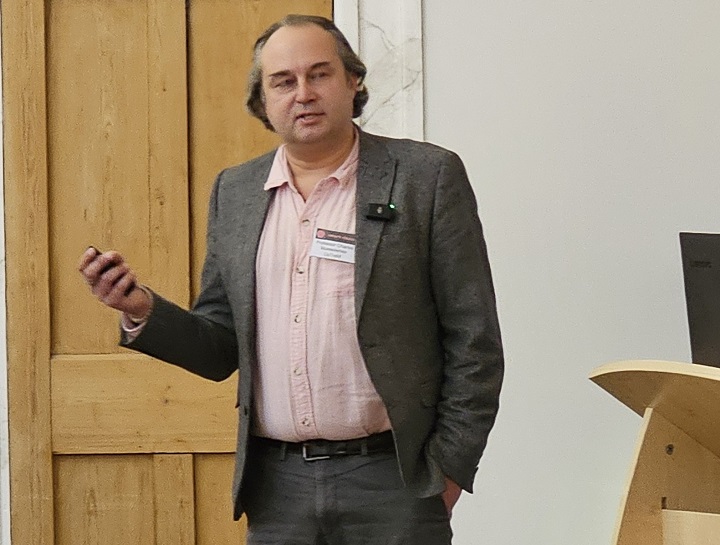
Professor Charles Musselwhite will deliver the keynote presentation at Road Safety GB’s Mature Drivers’ Conference, discussing the ‘five patterns of adjustment in older adults who stop driving’.
Hosted by Road Safety GB, with support from GEM Motoring Assist, The Road Safety Trust and Waymo, the Mature Drivers Conference will be held at Austin Court, Birmingham, on 28 April 2026.
The conference, titled Safe System Thinking for Mature Road Users, will consider mature road users in the context of the Safe System. Alternatives to, and retiring from, driving will also be covered.
The delegate fees are £195 for Road Safety GB members and £245 for non-members (both plus VAT).
- Click here for more information and /or to register to attend
- Click here to find out more about Road Safety GB membership
Professor Musselwhite is Head of Psychology at the Centre for Transport and Mobility at Aberystwyth University. His research applies community and environmental psychology to mobility, the built environment, and health and wellbeing, with a particular focus on environmental gerontology: older people’s road user safety, driving cessation, and age-friendly neighbourhoods.
He has led or co-led 55 funded projects with a total value of circa £25.5m and published 70+ journal articles, 27 book chapters and five books. Charles is a Fellow of the Academy of Social Sciences and Chair of the Universities Transport Study Group. He advises government and third-sector bodies including the Welsh Government’s Ministerial Advisory Forum on Ageing, and Transport for Wales.
Charles will explain that while we know a lot about the risks associated with stopping driving, much less attention has been given to the fact that older adults don’t experience this transition in the same way.
His research has identified the following five recurring profiles: Proactive Adapters, Reluctant but Responsible, Identity-Threatened Resisters, Socially Supported Dependents, and Constrained Survivors – with each segment showing distinct demographic patterns, coping strategies and risks. He will argue that understanding these segments helps practitioners tailor their approach.
He will also highlight practical strategies including identity-sensitive conversations, early planning, mobility and travel training, strengthening family and community support networks, and improving access to community transport—especially in rural and low-resource areas.
Overall, his work shows that driving cessation is not a single event but a varied and personal journey. Matching support to the type of older adult can improve wellbeing, reduce conflict and help people stay mobile and connected after they stop driving.
For more information about the Mature Drivers Conference contact Nick Rawlings by email.
Comment on this story