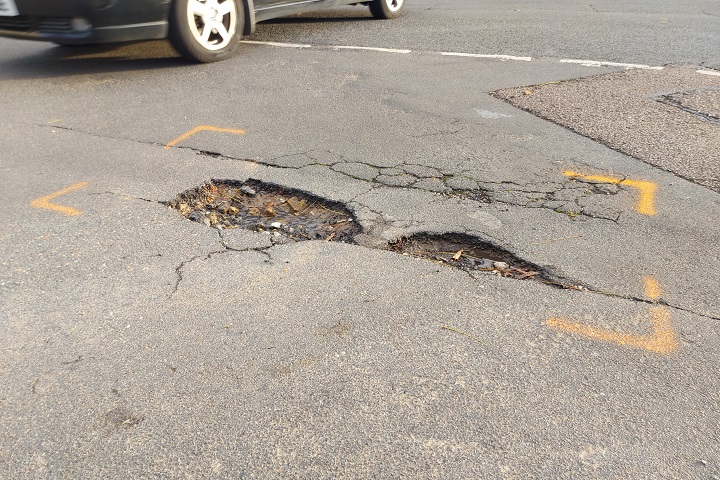
This summer’s heatwaves and record temperatures could cause already poor road surfaces to deteriorate further, leading to more potholes, the RAC has warned.
The motoring organisation says intense ultraviolet (UV) radiation from the sun can chemically age the bitumen used to bind road surfaces together.
Combined with roads absorbing heat from the sun, this accelerates the oxidation process and can cause asphalt to become brittle and crack as it cools.
Once cracks develop, water can penetrate the surface, while the impact of passing vehicles can cause further deterioration and eventually lead to potholes.
Simon Williams, RAC head of policy, said: “As UV and heat oxidise the bitumen binder in asphalt, it becomes harder and less flexible which leads to cracking.
“Then water penetrates cracks and as vehicles drive over them, the surface breaks and potholes start to appear. This is the last thing our already fragile roads needed.”
The warning comes as new research from the RAC suggests concern about the condition of the UK’s roads continues to grow.
According to the RAC Report on Motoring 2026, 51% of drivers say the poor state of the UK’s roads – particularly local roads – is their biggest motoring-related concern, up from 47% in 2025.
Two-thirds (66%) of drivers say the condition of roads in their local area has deteriorated over the past 12 months, compared with 59% last year.
The research also found 83% of drivers encounter potholes on most journeys, while 54% say they come across them every time they travel by car.
Among drivers who frequently encounter potholes, 58% say they have to take evasive action to avoid them on every journey, with a further 37% doing so on most journeys.
Meanwhile, 34% of drivers surveyed said their vehicle had suffered damage as a result of poor road surfaces, up from 29% in 2025. The RAC says damage more serious than a puncture can cost motorists up to £590.
Mr Williams added: “Potholes are often associated with cold or wet winters, but prolonged periods of hot, sunny weather also takes its toll on the roads.
“Intense UV exposure and heat gradually oxidise the bitumen that binds asphalt together, making surfaces more brittle and prone to cracking. Once cracks develop, traffic and later rainfall can quickly turn them into serious defects.”
The RAC says preventative maintenance, including surface dressing roads that remain in reasonable condition, will be important in reducing further deterioration.
Mr Williams added: “After the exceptional heat of this summer it’s even more important that we maintain our roads properly.
“We need to be surface dressing roads still in reasonable condition to keep them that way. This involves spreading chippings on to fresh bitumen binder and sealing them against the ingress of water, which is the enemy as it leads to cracking and potholes.”
Comment on this story