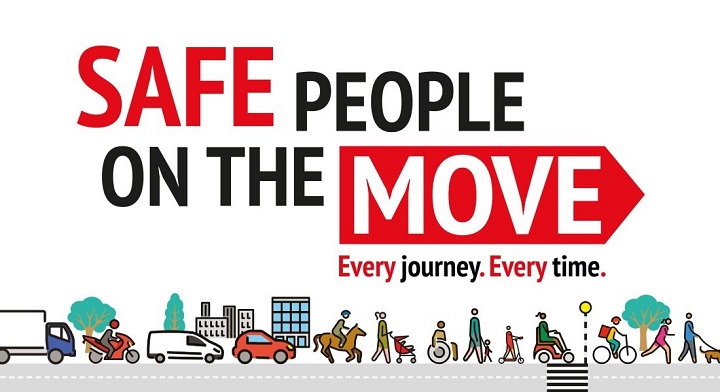
One in three people know someone who has been killed or seriously injured in a collision involving a pedestrian, cyclist or motorcyclist, according to new research released by Brake to mark the start of Road Safety Week 2026.
Road Safety Week is organised annually by Brake, beginning on World Day of Remembrance for Road Traffic Victims. The campaign aims to highlight the impact of road crashes and encourage action to prevent deaths and serious injuries.
Brake is calling for greater protection for vulnerable road users as this year’s Road Safety Week gets underway (15–21 November), highlighting the shared responsibility everyone has in keeping roads safe.
This year’s theme, Safe People on the Move, focuses on the need to protect people whatever their mode of transport, while recognising that those with the greatest potential to cause harm have the greatest responsibility to protect others.
New research commissioned by Brake, involving 3,000 UK adults, found that 32% of respondents know someone who has been involved in a collision in which a pedestrian, cyclist or motorcyclist died or sustained serious injuries. Meanwhile, 85% said they worry that a loved one could be involved in a road crash.
The findings come against a backdrop of concerning casualty statistics. In 2025, pedestrians, cyclists and motorcyclists accounted for 55% of all people killed or seriously injured on UK roads.
Of the 31,040 people killed or seriously injured last year, 6,535 were pedestrians, 4,456 were cyclists and 6,227 were motorcyclists and their passengers.
The overall number of deaths and serious injuries increased by 4% compared with 2024, reaching its highest annual level since 2018.
Cyclists perceived to be most at risk
Brake’s research found that cyclists were perceived to be the most vulnerable road users, with 52% of respondents believing roads are unsafe for people using pedal bikes or e-bikes. Furthermore, 42% said they would feel unsafe cycling, while one in five (20%) would like to cycle more but do not believe roads are safe enough.
Almost a quarter (23%) of respondents also felt roads were unsafe for pedestrians, while 45% believed roads were unsafe for motorcyclists and their passengers.
The research additionally highlighted concerns among other road users, with 44% believing roads are unsafe for wheelchair and mobility scooter users.
Although 90% of respondents agreed that everyone shares responsibility for using roads safely, 61% felt drivers needed to take extra care to protect more vulnerable road users.
Brake also found that 84% of people considered road safety an important public health issue.
Ross Moorlock, Brake’s CEO, said: “Road safety should not be a political battleground or a debate that pits different road users against one another.
“Whoever we are and however we travel – whether we walk, wheel, ride or drive – we all have a role to play in keeping roads safe. But we must also recognise that those with the greatest potential to cause harm carry the greatest responsibility for protecting others.
“As a charity that supports thousands of road victim families every year, we sadly know too well how road crashes devastate the lives of everyone involved.”
He added that the focus should be on using evidence to address road safety as a public health issue and prevent the deaths and serious injuries that continue to occur on UK roads.
Thousands taking part across the UK
Thousands of schools, organisations, communities and individuals are taking part in Road Safety Week 2026, with the campaign expected to reach more than four million people.
Brake has provided a free action pack for registered participants, containing resources, information and guidance to help organisations and individuals promote safer road use.
Activities include educational resources for schools and young people, alongside guidance for organisations whose employees drive as part of their work.
Comment on this story