The first confirmed session at NRSC 2026 comprises seven presentations looking at children and road safety education in schools.
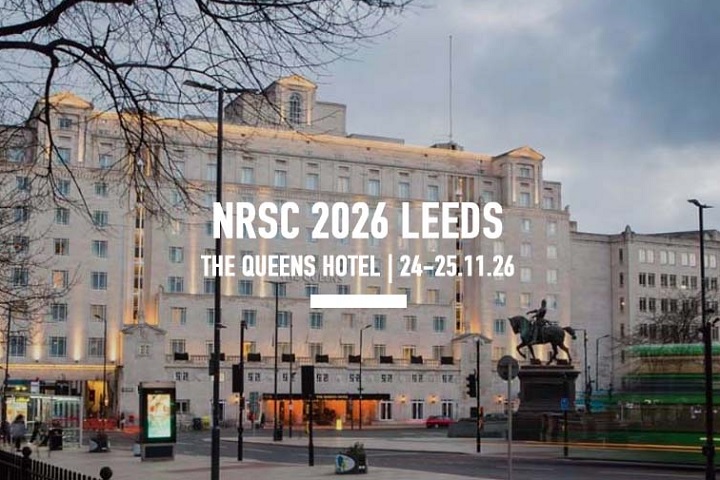
The National Road Safety Conference (NRSC) 2026 is being held at The Queens Hotel in Leeds on 24-25 November. The event is co-sponsored by GEM Motoring Assist, Jenoptik, Waymo and Westcotec.
For the past two years around 400 road safety professionals have attended NRSC, and this year more than 170 people have already booked to do so.
In addition, 16 organisations have already signed up to exhibit alongside the conference.
A call for papers, issued earlier this year, produced over 100 submissions from people wishing to present at the conference.
The presentations selected to feature in the children and road safety education in schools session are as follows:
Safety Beyond Silos: Expanding Opportunities to Support Road Safety Education Across Schools and Communities
Presented by: Kerry Doyle, Road Safety Lead, Surrey Fire & Rescue Services
This presentation explores how Surrey Fire and Rescue Service (SFRS) developed a “Safety Beyond Silos” approach to amplify consistent national, regional and local road safety messages and strengthen road safety education for children, young people, parents and carers across Surrey.
Road Safety Education – Delivery in Secondary Schools
Presented by: Amy Longworth & Autumn Rose, Via East Midlands (both)
The Via East Midlands data-led Road Safety Education programme reaches over 30,000 children and adults each year. Well over half of these are secondary aged pupils, from more than 40 secondary schools across Nottinghamshire. If you’re thinking about reaching out to this age group or want to expand your existing programme, this presentation will help you overcome the barriers and give you the confidence to deliver more interventions with this age group, in your local area.
Issues Local Authorities face when providing a School Crossing Patrol Service
Presented by: Tony Crook, Road Safety Manager, Lancashire County Council
This presentation will cover Lancashire’s journey in providing its School Crossing Patrol Service, looking at the issues that the Authority faces in managing this much needed road safety function. The presentation will discuss funding, staffing, management support provision and will highlight a recent ‘Stop means STOP’ campaign to educate driver behaviour, which ran after recent incidents where vehicles have collided with school crossing patrol officers.
Evaluating the John Perryn Primary School Street Scheme in a Deprived London Catchment
Presented by: Nii Okai Nunoo, Graduate Transport Planner and Traffic Engineer, Norman Rourke Pryme
School Street schemes are expanding rapidly across London as part of efforts to reduce child road danger and create safer school environments. While borough-level evaluations often report traffic reductions, less is known about how these schemes are experienced by the parents and residents who interact with them daily. This paper presents a mixed-methods evaluation of the John Perryn Primary School Street in Ealing (West London), combining collision data, automated traffic counts, and semi-structured interviews with parents and residents.
Early Insights from a New Study on Neurodivergent Children and Road Safety
Presented by: Dr Suzy Charman, Executive Director, Road Safety Foundation
Neurodivergent children face distinct challenges when navigating the road environment. This research aims to build an evidence base on how neurodivergent children experience roads and what can be done to improve their safety and wellbeing.
Are cycle helmet standards protecting children in vehicle collisions? Evidence from real-world injury patterns
Presented by: Dr William Dawber, Researcher in Brain Biomechanics, Imperial College London
Children’s cycle helmets are currently certified using the same impact conditions as adult helmets, which overlooks key differences in their injury physiology, tolerance, and mechanisms. Despite these differences, there lacks cohesive data for the causes of prevalent and severe head injuries in child cyclists. This study found that 75% of injuries occurred on paved roads, and ages as young as five were at significant risk. The results highlight a critical need for helmet test methods that accurately represent the conditions of severe head injury in child cyclists.
Investigating challenges experienced by autistic children when crossing roads
Presented by: Dr Yee Mun Lee, Associate Professor, Institute for Transport Studies, University of Leeds
Independent travel training (ITT) is widely implemented across the UK, yet its effectiveness for autistic adolescents remains unclear. This presentation will identify: (1) which skills are most difficult to train; (2) which types of crossing infrastructure are easiest to master; (3) which aspects of road crossing caregivers perceive as challenging, and how these relate to autistic traits. The findings identify specific learning barriers and individual differences relevant to tailoring training and designing inclusive road environments.
More information
For more information about NRSC 2026 please contact either Sally Bartrum (delegate registration) or Nick Rawlings (agenda, exhibition and sponsorship) by email, or alternatively both can be contacted on 01379 650112.
Hi,
This is a very important initiative, especially with the growing need to improve road safety awareness among children and young people. Education plays a key role in building safer communities and responsible future road users. I’ve also come across useful educational resources and UK study https://www.studyinuk.com/ guidance through Study in UK for students exploring opportunities in the UK.
Kalpna
+1