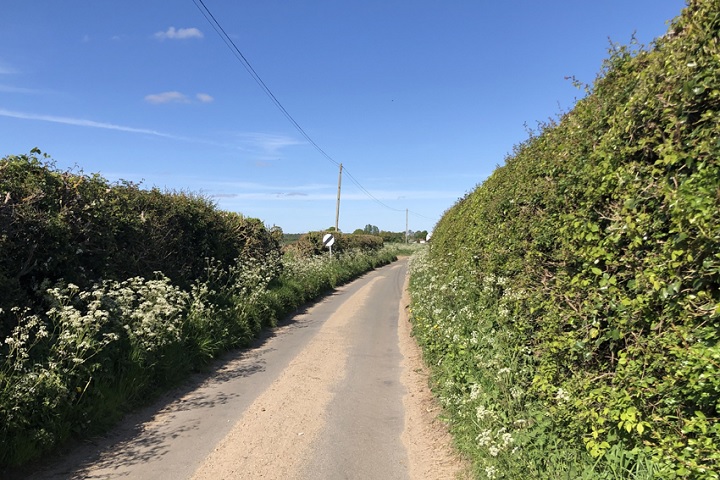
Millions of motorists are being diverted onto higher‑risk rural roads as congestion, sat‑nav rerouting and road closures reshape everyday journeys, new research shows.
Data published by IAM RoadSmart shows that over the past 12 months, more than half (54%) of motorists have been forced to detour onto a rural road because of congestion on motorways, dual carriageways and other main A roads.
Four in ten (42%) of drivers have experienced a mid-journey change from their sat-navs which ended up rerouting them away from the main network onto country lanes while nearly two-thirds (60%) were forced to do the same thing because of a road closure.
DfT data shows a significant increase in the number of vehicles on our roads in the last decade. By the end of 2015, there were 37,344,511 licensed vehicles in the UK, however by the end of 2025, this had increased by 13% to a near record 42,283,514 vehicles.
Over the same period, average delays per vehicle on the strategic road network have increased from 8.6 seconds for the year ending 2015 to 11.2 seconds by September 2025. Total vehicle miles reached almost 338 billion for the year ending September 2025, almost on par with the December 2019 peak prior to the COVID pandemic.
Despite carrying 45% of traffic, six in ten (60%) of all road fatalities occur on a rural road. Traffic shifting to rural roads may encounter additional hazards including tractors, wildlife, narrow lanes, restricted views from roadside foliage, as well as a lack of safe infrastructure such as pavements and cycle lanes meaning vulnerable road users are exposed to greater traffic danger.
Many of these roads will have national speed limit status which means inappropriate speeds for road conditions are more common, often putting motorcyclists at danger from other traffic travelling too fast or being poorly positioned.
Almost three quarters (72%) of IAM RoadSmart motorcycle members report that in the last 12 months alone, they had encountered an oncoming vehicle in the middle of the road as they entered a bend.
While the UK Government has committed to no new smart motorways following concerns about their safety, there is a risk that without new infrastructure and additional capacity on the motorway and wider strategic network that increasing gridlock will push more people onto unfamiliar rural routes with the additional hazards associated with those roads.
Nicholas Lyes, IAM RoadSmart director of policy and external communications, said: “Every year, more people are killed on a rural road than any other road type yet worryingly we’re seeing a high number of people taking unplanned diversions to use them.
“Congestion is inevitable, but we would encourage people to question if a diversion onto an unclassified or single-track route is worth saving a few minutes considering the increased hazards they might face. Often, other people following sat-navs will similarly divert and you end up with traffic volumes that exceed what the road is designed for and may ultimately not save time the diverted driver expects.
“Traffic growth shows little sign of abating, yet without a commitment to increase capacity on the wider strategic network, we may see more traffic filtering onto the rural road network, with potentially grave consequences.”
Comment on this story