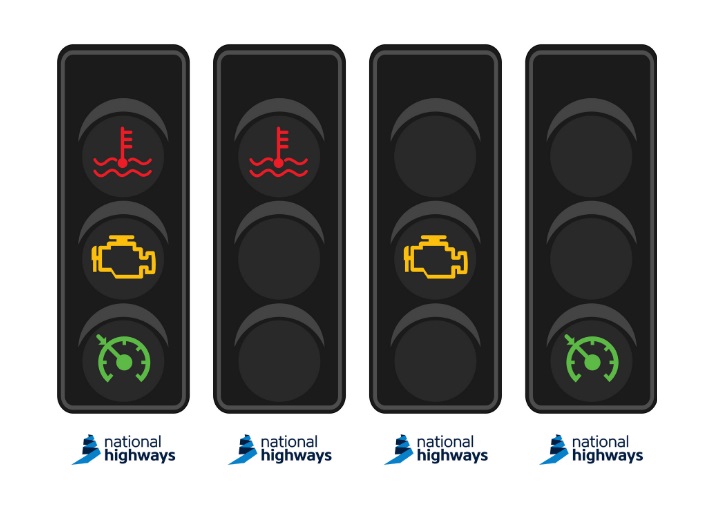
National Highways has been leading a project to increase driver awareness on the correct actions to take when a warning light appears on a vehicle’s dashboard.
The project aims to reduce instances of preventable stops on the strategic road network, by developing an understanding of what the different colours of each warning light mean, in order to help drivers respond appropriately and safely.
Dashboard warning lights are an essential feature in modern vehicles, designed to provide information about the status of a vehicle and can alert to potential issues.
These lights typically follow a traffic light colour system—red, amber, and green (although these may be white, or blue depending upon the vehicle manufacturer).
National Highways says: “Dashboard warning lights are a vital communication tool between your vehicle and you, the driver. Understanding their meanings and knowing how to respond can help ensure your safety and prevent costly repairs.
“Whether it’s a red light signalling a serious issue, an amber light advising maintenance, or a green, white or blue light providing information, taking the appropriate action is key.”
National Highways has developed a guide that explains the different types of dashboard warning lights, their meanings, and the actions drivers should take when they appear.
Red warning lights
A red warning light means there may be a serious fault with a vehicle. Do not begin a journey with a red warning light showing. If one appears while driving, do not stop in a live lane unless absolutely necessary. If safe to do so, exit at the next junction or service area to seek advice and assistance.
When not possible to leave the carriageway:
- Move into the left lane.
- Pull into an emergency area, layby, or onto a hard shoulder.
Amber warning lights
An amber warning light is advisory and suggests that maintenance or vehicle checks may be needed. Drivers should not set off on a journey with an amber warning light showing. If one appears while driving, do not stop in a live lane unless absolutely necessary. If safe to do so, exit at the next junction or service area to seek advice and assistance.
When not possible to leave the carriageway:
- Move into the left lane.
- Pull into an emergency area, layby, or onto a hard shoulder.
Addressing a potential issue promptly can help to prevent more serious problems from developing.
Green, white or blue warning lights
These lights are usually green but can also be blue or white depending on the vehicle manufacturer. They are for general information about your vehicle. Drivers do not need to stop if these appear, but it’s a good habit to find out what they mean at a next planned stop.
It’s important to be familiar with a car’s specific symbols. Refer to a vehicle’s instruction manual for detailed information. This is especially important when purchasing a new vehicle or hiring an unfamiliar vehicle.
By understanding what each type of dashboard warning light means, drivers can make calm, informed decisions that help to keep all road users safe.
Comment on this story