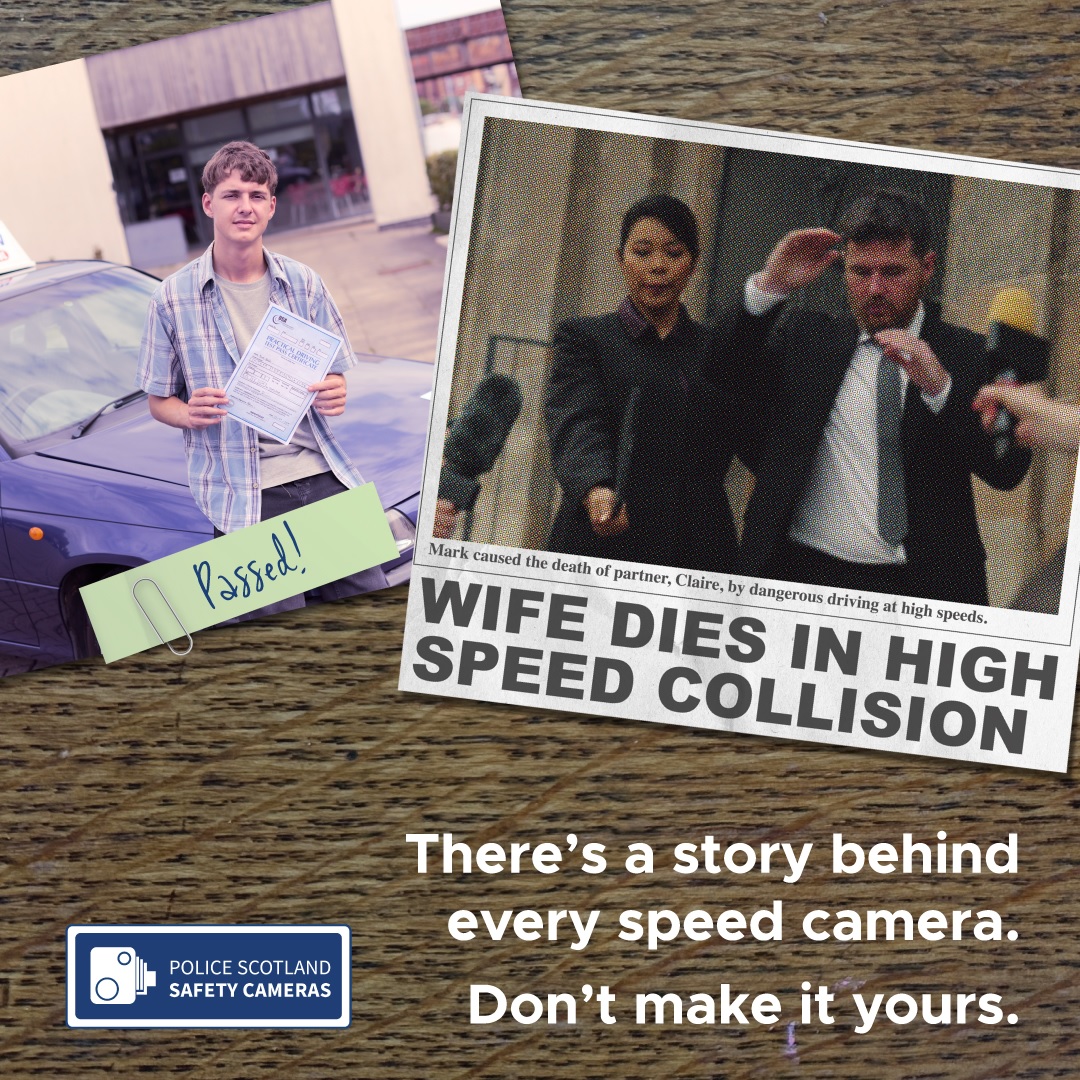
Police Scotland Safety Cameras is reminding motorists that speeding can have devastating consequences, with a new campaign warning drivers that they could become the story behind the speed camera.
The national campaign highlights the human stories behind safety cameras, reinforcing the message that they are placed at locations where someone has been killed or seriously injured in a collision involving speed.
Running across multiple channels and outdoor advertising for four weeks from 31 August 2026, the campaign tells the story of a motorist who never thought it would happen to them – but whose attitude to speeding ultimately has devastating consequences.
The campaign aims to challenge the perception that speeding is harmless or that serious collisions happen only to other people.
Speeding can become a habit, influenced by factors including perceived time pressures, social influence and a lack of awareness of the risks involved. Police Scotland Safety Cameras says breaking that habit requires a conscious effort to change attitudes and actively choose safer driving behaviours.
By locating safety cameras at collision hotspots, the campaign encourages drivers to recognise why speed limits are in place and the potentially serious consequences of exceeding them.
Key messages include:
- A collision can happen to anyone.
- Speed limits are in place for the safety of all road users.
- Driving above the speed limit can have serious consequences.
- Give yourself enough time to react to other road users.
- Driving above the speed limit is not worth the risk.
A social media toolkit is available for road safety partners who want to participate in the campaign.
Simple question. Could a previously installed speed camera have credibly prevented any of those KSI collisions?
Eric Bridgstock
0
Looking back, I think it was misguided – although well-intentioned – to have fixed speed cameras only at ‘collision hotspots’ (however defined).
Habitual speeders will try and speed anywhere, so perhaps the fixed cameras should have been ‘anywhere’ as well, with more chance of catching and prosecuting the serious offenders.
By comparison, let’s say there had been some KSIs caused by drink drivers … it would be naive and again misguided for the police to respond by only concentrating their efforts on catching drink-drivers at sites of previous collisions. Like speeders, drink-drivers can be anywhere, so the means to catch them should be ‘anywhere’ as well.
Hugh Jones, South Wirral
0