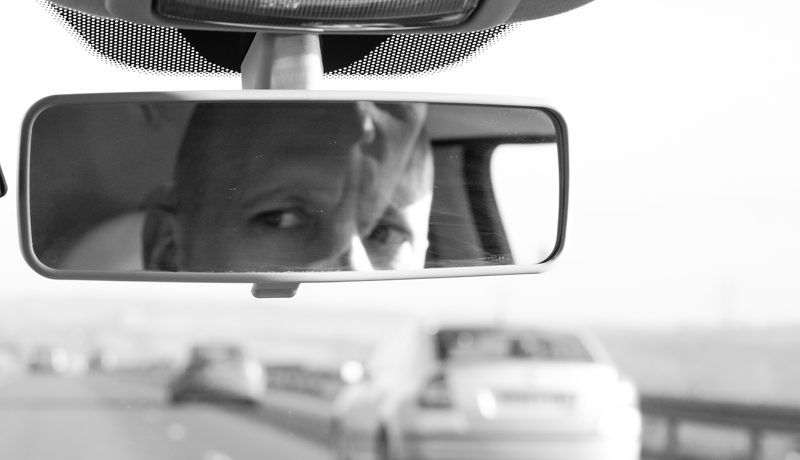
Research published by the Government has found ‘little clear evidence’ on the relationship between visual impairment and the risk of road collisions – particularly from the UK.
The rapid evidence review was commissioned in response to action 31 of the Road safety statement 2019, which committed the DfT to ‘commission research to understand the extent to which driver vision issues pose a road safety risk’.
This action was developed:
- due to the growing numbers of older drivers, and the relationship between ageing, and visual and cognitive function
- in recognition of the fact that the relationship between age and functional decline is not linear
The research was carried out in 2020 – but only published last month. It conflicts with a vast body of research which shows good eyesight is crucial for driving, impacting hazard perception and reaction times, with poor vision increasing crash risk.
However, the rapid review found little clear evidence on the relationship between visual impairment and the risk of road collision or casualty, particularly from the UK. The literature indicates that cataract is the only condition clearly associated with significantly higher rates of motor vehicle collisions.
However, international evidence indicated that drivers with a visual impairment, in particular glaucoma, cataract and age-related macular degeneration, may choose to moderate their risk of motor vehicle collisions by changing their driving behaviour, such as avoiding driving at night.
There was also some evidence that drivers compensate for their visual impairments by employing different patterns of eye movement and increased scanning behaviour.
There were three visual impairments identified for which there was some limited evidence of an association with increased risk of road traffic collision and which are not currently routinely tested for in the GB national vision standard for driving.
These were impaired contrast sensitivity, visual field loss and age-related macular degeneration.
Changes suggested to the existing GB national vision standards for driving included: introducing a measure of contrast sensitivity, a measure of visual field, and expanding the test for visual acuity to include both dynamic and static visual acuity.
ScotCen Social Research undertook this research on behalf of DfT.
Comment on this story