The Government’s highly-anticipated Road Safety Strategy has published, pledging to save thousands of lives on the nation’s roads by tackling drink driving, improving training for young drivers, and introducing mandatory eye tests for older motorists.
The strategy sets out an ambitious plan to reduce deaths and serious injuries on Britain’s roads by 65% by 2035, with an even more stretching target of 70% for children under 16 years.
Click here to read the full story.
Key highlights:
- First Road Safety Strategy in more than a decade – now published
- Casualty reduction targets reintroduced
- Consultation on lowering the drink drive limit; mandatory eye tests for older motorists
- New Road Safety Investigation Branch
- Road Safety GB and Project EDWARD teaming up for webinar at 9:30am on Friday 9 January
This page does not automatically refresh. Click here to load the latest entries.
15:30
Road Safety GB and Project EDWARD team up for webinar
A reminder than a special 90-minute webinar will be taking place on Friday morning (9 January), getting underway at 9:30am.
Panellists include Nicola Foster, chair of Road Safety GB, as well as CC Jo Shiner KPM (NPCC), Dan Quin (NFCC), Saul Jeavons (ARRM), Professor Charles Musselwhite, Mark Cartwright (National Highways) Jamie Hassall (PACTS), Sharron Huddlestone and Dr Ian Greenwood.
The webinar will unpack the Government’s new targets, Safe System approach, young and older driver measures, vehicle technology, enforcement, vulnerability and work related road risk.
14:30
SERP pleased to see road safety a “high priority” for Government
Some reaction now from the Safer Essex Roads Partnership, who describes the strategy as a significant and positive step towards achieving Vision Zero.
The partnership said: “We are extremely pleased to see that road safety is a high priority for the Government. This strategy is a hugely important step forward and one we strongly welcome. It recognises that road safety is a shared responsibility, so we look forward to exploring the details of the strategy in the coming weeks to turn ambition into the actions needed to achieve Vision Zero.
“The proposed consultations directly reflect what we see on Essex roads every day, particularly around young driver risk, drink driving and helping people to drive safely for longer as they age.”
14:00
Reaction from Brake
Brake is urging the Government to view the strategy through the eyes of those families impacted by road collisions.
Ross Moorlock, Brake’s CEO, said: “This new Road Safety Strategy to tackle the unacceptable level of road death and injury on our roads marks a turning point. For the first time in 10 years, road safety is back on the national agenda.
“Every year at Brake, we support more than 2,000 families who have been bereaved or injured in a road crash through our National Road Victim Service, so we see first-hand the trauma and devastation that follows a road death or injury for everyone involved.
“We urge the Government to view this strategy through the eyes of those families: through the eyes of every parent, grandparent, child, brother, sister or friend whose life has been torn apart in the aftermath of a road crash. A new Road Safety Strategy is an important first step, but its success depends on what happens next. Consultation must lead to evidence-based action to ensure the Government’s bold ambition is realised, with tangible outcomes that save lives and prevent more families from experiencing devastating loss.
“Road deaths and injuries are not inevitable. They are preventable tragedies. The good news is that we know the solutions that will make the biggest difference.”
13:30
The strategy at a glance – Robust enforcement to protect all road users
- consult on taking tougher action on drink driving by lowering the drink drive limit in England and Wales, including an even lower limit for novice drivers
- review the penalties and mandatory training for drink and drug driving offences, including consulting on the use of alcohol interlock devices
- consider bringing in new powers to suspend the driving licence for: (1) those suspected of committing a drink and/or drug driving offence until attendance at court or a guilty plea, or if bailed pending forensic analysis being undertaken; (2) those under investigation for the most serious motoring offences resulting in a fatality or serious injury
- consider exploring alternative methods for drug driving evidence collection and processing
- gather feedback on introducing penalty points for failure to wear a seat belt, and additional penalty points for drivers who do not ensure child passengers wear seat belts
- gather feedback on taking tougher action on those who fail to stop and report collisions, those who choose to drive unlicensed or without insurance, and those with no MOT
- consult on addressing the growing problem of illegal number plates, including ‘ghost’
number plates - introduce a new Roads Policing Innovation Programme
- explore opportunities to further DVSA’s ‘Earned recognition’ scheme
- explore the benefits and feasibility of financial incentives for voluntary training, and awareness raising on trailer and towing safety
13:00
The strategy at a glance – ensuring infrastructure is safe

12:45
The strategy at a glance – technology
The strategy pledges to take advantage of technology, data and innovation for safer vehicles and post collision care.
This includes to:
- consult on mandating the fitting of 18 new safety technologies for specific vehicle categories produced in unlimited series under the Great Britain type approval scheme
- explore the opportunities to join ‘Data for Road Safety’
- collaborate with a range of stakeholders to maximise the safety benefits of ADAS technologies
- collaborate with industry to ensure provision of clear, accurate information about ADAS functionality, limitations and user responsibilities
- establish a data-led Road Safety Investigation Branch for Great Britain
- make the secure linkage of police-recorded collision data and healthcare data a
shared policy priority between the DfT, NHS England and the DHSC - drive forward amendments to international regulations to ensure equal protection for all vehicle occupants through improved crash testing
- undertake further research aimed at identifying what vehicle design factors may be responsible for increased headlamp glare
- collaborate with stakeholders and vehicle manufacturers to further understand safety concerns regarding increasing vehicle size
12:30
The strategy at a glance – supporting road users
The strategy has four key themes, the first of which is supporting road users.
- consult on introducing a three or six month minimum learning period for learner drivers
- consult on a lower blood alcohol limit for novice drivers
- consult on introducing mandatory eyesight testing for drivers over age 70 and
develop options for cognitive testing for older drivers - continue to work closely with the National Police Chiefs’ Council to highlight the importance of regular police roadside eyesight tests for all drivers, ensuring that those drivers who fail to meet the minimum eyesight standards required for driving will have their driving licence revoked by DVLA
- continue to engage with the relevant regulatory bodies to highlight the importance of healthcare professionals notifying DVLA if their patient is unwilling or unable to notify
- consult on reforms for the training, testing and licensing regime for category A motorcycle licences in Great Britain
- pilot a National Work-Related Road Safety Charter for businesses that require people to drive or ride for them
- publish national guidance on the development and delivery of road safety education, training and publicity
- publish a manual to support the implementation of a Lifelong Learning approach for road safety
- continue to encourage safer road user behaviours via THINK!
- the MoJ will consult on a new Victims’ Code
12:20
The strategy at a glance – overarching targets
- 65% reduction in the number of people killed or seriously injured on roads in Great Britain by 2035, using a 2022-2024 baseline
- 70% reduction in the number of children (under 16 years) killed or seriously injured on roads in Great Britain by 2035, using a 2022-2024 baseline
11:55
Reaction from The Road Safety Trust

The Road Safety Trust welcomes the publication of the Government’s new Road Safety Strategy, hailing it an important milestone for everyone working to reduce deaths and serious injuries on UK roads.
Ruth Purdie OBE, chief executive of The Road Safety Trust, said: “The publication of a national road safety strategy is an important and welcome step, and one that many across the sector have been calling for over a long period of time. After years without a clear national framework, it is encouraging to see renewed leadership, ambition and long-term thinking being applied to road safety once again.
“The reintroduction of casualty reduction targets and the adoption of a Safe System approach signal a serious intention to reverse a decade of stalled progress and re-focus efforts on what is proven to save lives and reduce serious injury.
“We will now take the time to consider the strategy’s content in detail, and look forward to working constructively with Government and partners across the sector to respond to the consultations and help ensure that this renewed focus on road safety translates into real, measurable improvements for people and communities across the UK.”
11:30
Road Safety Strategy now available online
The highly-anticipated Road Safety Strategy, the first in a decade, has now been published online.
The document contains 60 pages, including a foreword from transport secretary Heidi Alexander, who says the strategy is “a call to action for government, local authorities, road safety groups, emergency services and the public”.
Click here to access the strategy.
10:30
Motorcycle licensing reforms on the agenda
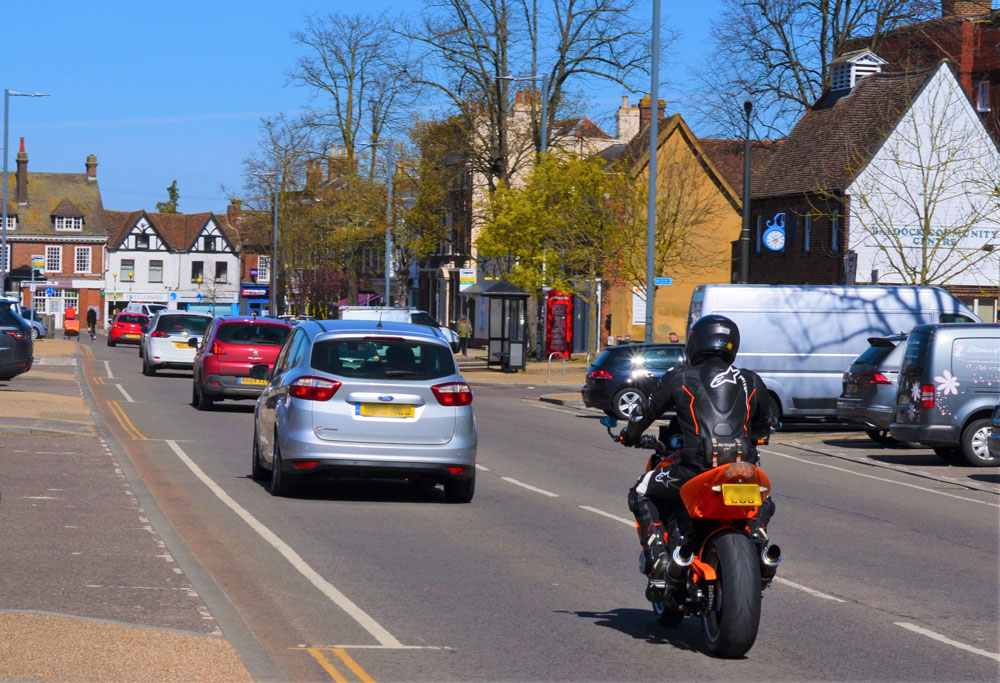
The strategy includes plans to reform to the current motorcycle training, testing and licensing regime – a move strongly welcomed by the NMC.
The NMC led calls for reform to the current licensing regime in 2021, by publishing detailed proposals aimed at creating a system which would make the licensing regime easier to understand and access, while maintaining appropriate road safety standards in training, improving these where possible.
The Government has also announced support for trials to improve motorcycle safety on rural roads.
Craig Carey-Clinch, NMC executive director, said: “The NMC strongly welcomes news that there is to be a consultation on reforms to motorcycle training, testing and licencing.
“These are areas which are fundamental to motorcycle safety and there are several options which can be considered as part of a structured new approach to motorcycle licensing that can deliver short, medium and long term safety improvements in line with new road safety targets.
“We also welcome news that the strategy will have a focus on improving rural motorcycle safety.”
10:10
RAC hails reintroduction of casualty reduction targets
Rod Dennis, RAC road safety spokesperson, said: “We’ve long said the dial needs to be turned up when it comes to reducing road casualties, so we warmly welcome this strategy – and especially the reintroduction of casualty reduction targets, that were scrapped 16 years ago.
“The simple truth is that this strategy can’t come soon enough. Britain might have some of the safest roads by international standards, but on average four people are still killed and 76 seriously injured every single day. That’s an unacceptable number of lives being ruined or cut short.”
9:45
Lower drink drive limit consultation welcomed

Hunter Abbott, managing director of personal breathalyser firm, AlcoSense
The government’s consultation to reduce the legal drink-drive limit in England and Wales, announced as part of the strategy, has been welcomed by Alcosense.
A study found that drivers with a breath alcohol level of 22 micrograms per 100 millilitres of breath (µg/100mL) are eight times less likely to be involved in a fatal crash than those at the current limit of 35 micrograms.
The legal limit in Scotland was reduced to 22 micrograms in 2014.
“But England and Wales remain an outlier with the highest legal drink-drive limit in the developed world,” says Hunter Abbott, managing director of personal breathalyser firm, AlcoSense Laboratories.
“This means we have drivers who are ‘legal but lethal’ on our roads. The evidence is clear – even modest reductions in blood alcohol concentration significantly lower crash risk.
“It would be a simple, effective step towards saving lives and would bring England and Wales in line with international standards.”
09:10
Words from the ministers
Heidi Alexander, secretary of state for transport, said:
“Every life lost on our roads is a tragedy that devastates families and communities. For too long, progress on road safety has stalled. This strategy marks a turning point.
“We are taking decisive action to make our roads safer for everyone, from new drivers taking their first lessons to older motorists wanting to maintain their independence. The measures we are announcing today will save thousands of lives over the coming decade.”
Lilian Greenwood, local transport minister, said:
“Our vision with this ambitious Road Safety Strategy is clear: to ensure that people can travel safely on our roads however they choose.
“One of the hardest parts of my job is speaking to families who have lost loved ones on our roads and this is something we as a Government are taking action to prevent. No family should have to endure that loss, and this strategy sets out how we will work to ensure fewer do.
“Experts and campaigners have long called for a comprehensive strategy that treats road safety as a shared responsibility – from car manufacturers and town planners to drivers and legislators.
“This strategy, the first in over a decade, shows a Government that is not just listening, but leading, and together, we can build a safer future for all road users.”
08:45
Reaction from Road Safety GB
Road Safety GB has welcomed the publication of the strategy, and has pledged to work with the DfT and the wider road safety community to deliver the measures included.
Nicola Foster, chair of Road Safety GB said: “We welcome the publication of this highly anticipated national Road Safety Strategy and look forward to reviewing the detail and being part of the consultations that will follow on key elements outlined as part of the strategy.
“Road Safety GB is extremely well placed to assist with communication, dissemination and training through our membership and national conference network. We look forward to supporting DfT and the wider road safety community in a collaborative delivery approach going forward in 2026 and beyond.”
08:30
First Road Safety Strategy in more than a decade
The first Road Safety Strategy in more than a decade is here. The Government says it will save thousands of lives on the nation’s roads by tackling drink driving, improving training for young drivers, and introducing mandatory eye tests for older motorists.
The key headlines can be read here.
Comment on this story